

 Rizioshop
Skin Barrier Routine After Retinol for Sensitive Skin
Retinol can be a useful ingredient in a thoughtful skincare routine, but sensitive skin often needs a slower, simpler approach. A supportive skin barrier routine after retinol focuses on gentle cleansing, moisturizer, sunscreen, and enough recovery time between applications.
This guide is educational rather than medical advice. Persistent burning, swelling, blistering, or severe irritation deserves professional evaluation.
What the skin barrier does
The outer layer of skin helps limit water loss and acts as part of the body’s first-line defense. Cleansers, weather, friction, over-exfoliation, and poorly tolerated products can all make skin feel tight or reactive.
Moisturizers commonly combine humectants, emollients, and occlusives. Ceramides are lipids naturally found in the skin, while ingredients such as glycerin can attract water and petrolatum can reduce water loss.
The NCBI’s overview of moisturizers discusses these basic functions. You can also compare ingredient roles in our guide to ceramides versus hyaluronic acid.
A simple post-retinol routine
Morning
- Rinse with lukewarm water or use a mild, fragrance-free cleanser.
- Apply a comfortable moisturizer to slightly damp skin.
- Finish with broad-spectrum sunscreen according to the product label.
Evening without retinol
- Remove sunscreen and makeup without scrubbing.
- Use a gentle cleanser and pat dry.
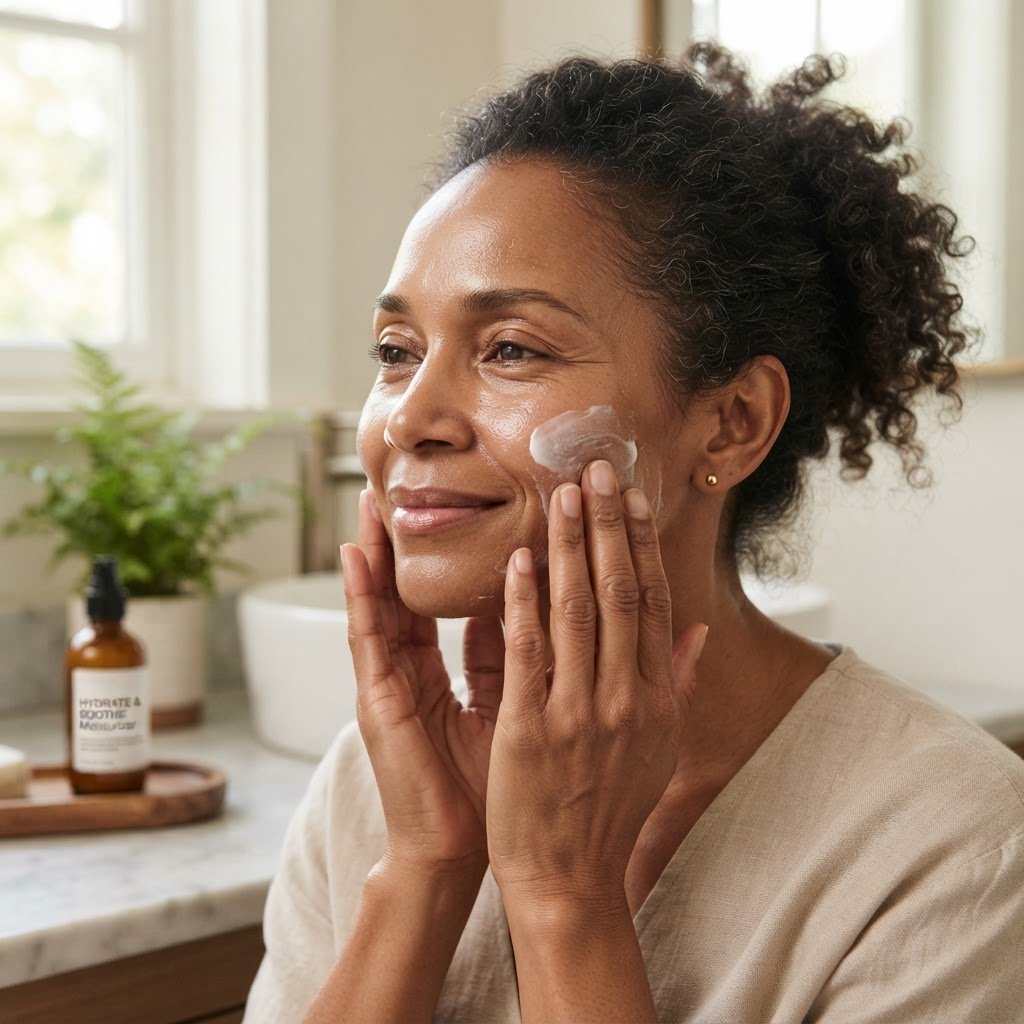
- Apply moisturizer; use a richer layer on areas that feel dry.
Retinol evening
- Cleanse gently and allow skin to dry fully if dampness increases stinging.
- Apply a small amount of retinol as directed on its label.
- Follow with moisturizer. Some people prefer moisturizer before and after retinol as a buffering method.
How often should sensitive skin use retinol?
Start with the lowest frequency that is practical, such as one evening weekly, and observe how your skin responds. If there is no ongoing irritation, some people gradually increase frequency; there is no prize for rushing.
Do not increase strength and frequency at the same time. Keep the rest of the routine boring while you learn what your skin tolerates.
Ingredients that may fit a barrier-focused routine
| Ingredient group | Role | What to watch |
|---|---|---|
| Ceramides | Support the skin’s lipid matrix | Formula may also contain fragrance or irritants |
| Glycerin | Humectant that binds water | Texture and climate affect comfort |
| Hyaluronic acid | Humectant used in hydrating formulas | Seal with moisturizer if skin feels tight |
| Petrolatum | Occlusive layer | May feel too heavy for some users |
| Colloidal oatmeal | Comforting ingredient in some products | Avoid if you know you are sensitive to it |
Look for short ingredient lists when troubleshooting. A product marketed for sensitive skin can still contain ingredients that do not suit everyone.
What to pause while your skin adjusts
- Physical scrubs and cleansing brushes.
- Strong exfoliating acids used on the same nights.
- Multiple new serums introduced together.
- Fragrance-heavy products if scent triggers discomfort.
- Hot water, aggressive rubbing, and frequent mask use.
Our skin barrier repair routine and redness and sensitivity guide cover additional ways to simplify a routine.
How to troubleshoot dryness or peeling
First, reduce complexity. Use a gentle cleanser, moisturizer, and sunscreen for several days while pausing optional actives. If symptoms settle, reintroduce one product at a time.
Peeling is not proof that a product is working. Persistent or worsening reactions should be assessed by a dermatologist, especially around the eyes or mouth.
Retinol and sun protection
Daily sunscreen helps protect exposed skin from ultraviolet radiation. Choose a product you will apply consistently, and follow its reapplication instructions when outdoors, sweating, or swimming. Sun protection also supports the broader goal of maintaining an even, comfortable complexion.
FAQ
Can I use moisturizer after retinol?
Yes, moisturizer is commonly used after retinol to improve comfort. Follow the product label and stop if you develop a concerning reaction.
Should sensitive skin use retinol every night?
Not necessarily. Lower frequency may be more comfortable, and tolerance varies widely.
Can I use vitamin C in the morning?
Some people do, but introduce it separately and keep the routine simple while adjusting to retinol.
When should I seek professional advice?
Seek advice for persistent burning, swelling, blistering, severe redness, or symptoms that do not improve after stopping the suspected irritant.
Conclusion
A barrier-first routine after retinol is intentionally unexciting: cleanse gently, moisturize consistently, protect from the sun, and increase retinol slowly if your skin remains comfortable. Simplicity makes it easier to identify what works.
Affiliate disclosure: RizioShop may earn a commission from qualifying purchases made through links on this page, at no extra cost to you.