

 Rizioshop
Ceramides vs Hyaluronic Acid for Dry, Sensitive Skin
When skin feels tight, flaky, or easily irritated, two ingredients appear again and again on product labels: ceramides and hyaluronic acid. They are not interchangeable, but both can have a place in a gentle routine.
This guide to ceramides vs hyaluronic acid for dry, sensitive skin explains what each ingredient does, how to layer them, and how to avoid common mistakes. Neither ingredient is a medical solution for eczema or another skin condition, and persistent redness or pain should be evaluated by a dermatologist.
Affiliate disclosure: RizioShop may earn a commission from some sponsored links. This does not change the price you pay or our editorial approach.
The short answer
Ceramides are skin-identical lipids that help support the barrier. Hyaluronic acid is a humectant that attracts and holds water in the outer layers of skin. If dryness is the main issue, a moisturizer containing ceramides may provide more barrier support; if dehydration and tightness are the main issue, a simple hyaluronic acid serum may add water before moisturizer.
Many people can use both. The formula as a whole, fragrance level, preservatives, and your own sensitivity often matter more than choosing a single fashionable ingredient. In fact, layering both ingredients — hydration first, then barrier protection — can address the two underlying causes of uncomfortable skin at once: lack of water and lack of lipids.
The science behind dry and sensitive skin
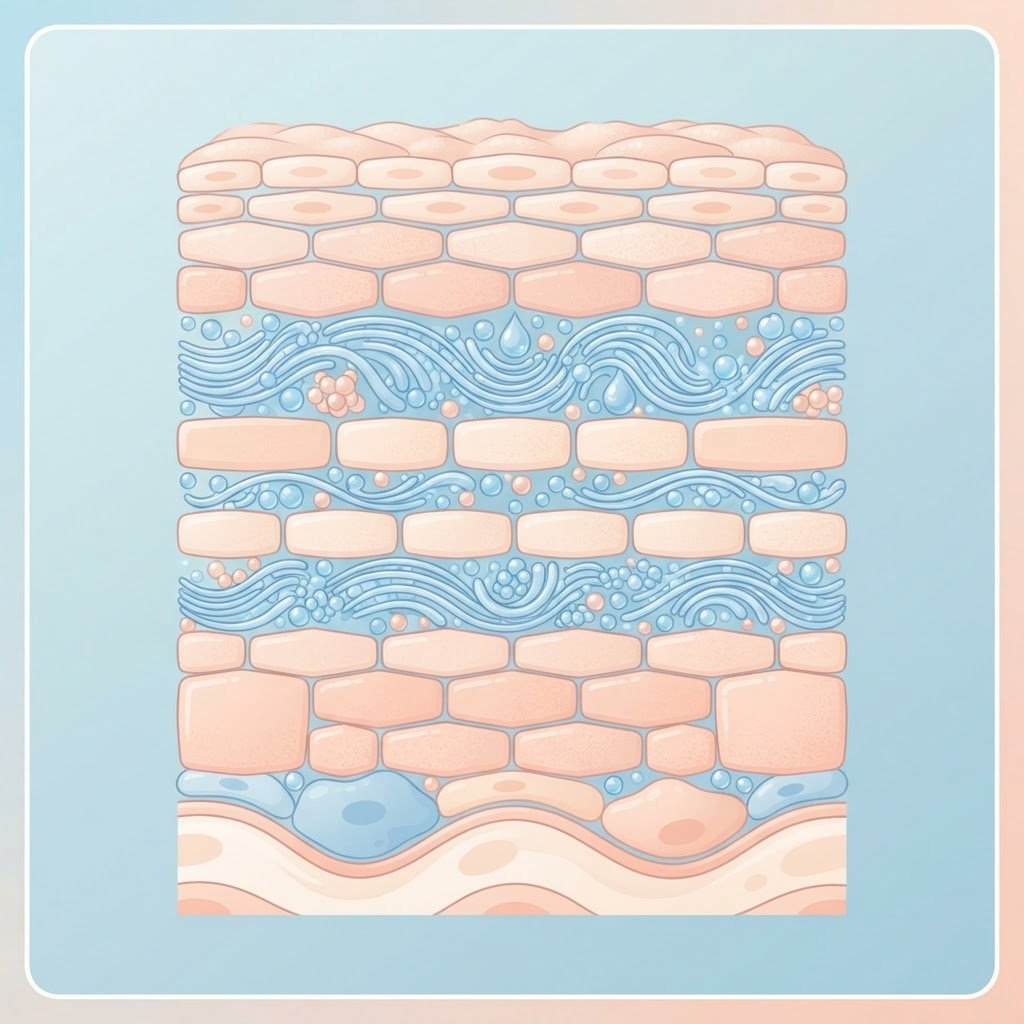
To understand why ceramides and hyaluronic acid are so widely recommended, it helps to understand what happens when skin becomes dry and sensitive in the first place. The outermost layer of the skin, called the stratum corneum, is often described as a “brick and mortar” structure. Skin cells (corneocytes) are the bricks, and a blend of lipids — including ceramides, cholesterol, and free fatty acids — forms the mortar that holds everything together.
When this lipid matrix is intact, it keeps moisture in and potential irritants out. When it becomes compromised — whether from harsh cleansers, cold weather, low humidity, over-exfoliation, or genetic factors — water escapes more easily and the skin becomes more permeable to irritants. The result is the tightness, flaking, redness, and reactivity that characterize dry, sensitive skin.
Two things are happening simultaneously: transepidermal water loss (TEWL) increases because the barrier can no longer hold moisture effectively, and hydration levels within the skin drop because there is less water being retained in the first place. Ceramides primarily address the first problem by reinforcing the barrier and reducing TEWL, while hyaluronic acid addresses the second by drawing water into the skin’s outer layers. This is why the question of ceramides vs hyaluronic acid for dry, sensitive skin is not really an either/or for most people — both are addressing different aspects of the same underlying issue.
What are ceramides?
Ceramides are waxy lipid molecules naturally present in the outer layer of skin. They sit between skin cells and help reduce water loss. Cleansing, weather, age, and some skin conditions can affect the barrier, which is why ceramides are common in creams designed for dry or sensitive skin.
Ceramides make up roughly 50% of the skin’s lipid content by mass, making them the most abundant lipid in the stratum corneum. They are composed of a sphingosine base linked to a fatty acid, and this structure gives them the ability to form orderly, water-resistant sheets between skin cells. When ceramide levels drop — which can happen with age, harsh cleansing, or barrier disruption — the “mortar” weakens and moisture escapes more readily.
Types of ceramides you might see on labels
Not all ceramides are identical. The scientific literature identifies at least nine major classes of ceramides in human skin, and skincare products may use synthetic or plant-derived analogues designed to mimic them. Here are some of the most common ones you will encounter on ingredient lists:
- Ceramide NP (also called Ceramide III): One of the most widely used in skincare; designed to help reinforce the barrier and improve moisture retention.
- Ceramide AP (also called Ceramide IIIA): Often paired with Ceramide NP; may help support the skin’s natural lipid arrangement.
- Ceramide EOP (also called Ceramide I): Thought to play a role in the structural integrity of the barrier matrix.
- Phytoceramides: Plant-derived ceramides, often from rice, wheat, or konjac; used as alternatives to animal-sourced ceramides and commonly found in both topical products and oral supplements.
You do not need to memorize these names, but seeing multiple ceramide types listed together in a single product can be a good sign that the formula is designed to mimic the skin’s natural lipid diversity rather than relying on just one component.
What to look for on a label
- Products that list ceramides alongside cholesterol and fatty acids may be designed to mimic barrier lipids. Research suggests that a blend of ceramides, cholesterol, and fatty acids in specific ratios may be more effective than ceramides alone.
- A fragrance-free formula is often a sensible starting point for reactive skin. Fragrance — both synthetic and natural — is one of the most common triggers of contact irritation.
- Look for a texture you will use consistently; a perfect ingredient is not useful if the product feels unpleasant. A lightweight lotion used daily will generally outperform a rich cream that sits in your cabinet.
- Check whether ceramides appear in the first half of the ingredient list. Ingredients are listed in descending order of concentration, so a product that lists ceramides near the end may contain only token amounts.
What is hyaluronic acid?
Hyaluronic acid is a humectant found naturally in the body. In skincare, it can help attract water to the surface of the skin. It is available in different molecular sizes and concentrations, but a higher percentage does not automatically mean a better result.
Hyaluronic acid is a glycosaminoglycan — a type of molecule that occurs naturally in connective tissue and skin. A single gram of hyaluronic acid can hold up to six liters of water, which is why it is widely used in hydrating formulas. In topical skincare, it works primarily on and near the surface, drawing moisture from the environment and from deeper layers of the skin into the stratum corneum.
Molecular weight matters
Not all hyaluronic acid is the same. The molecule comes in different sizes, often described as molecular weights, and each size has slightly different properties:
- High-molecular-weight hyaluronic acid: Larger molecules that stay on the surface of the skin and form a breathable film. These tend to provide immediate surface hydration and a smoothing effect.
- Low-molecular-weight hyaluronic acid: Smaller molecules that may penetrate more deeply into the outer layers of skin. These are often marketed as providing longer-lasting or deeper hydration.
- Cross-linked or encapsulated hyaluronic acid: Modified forms designed to release gradually or resist quick breakdown; used in some premium formulas.
Many well-formulated products combine multiple molecular weights to provide both surface hydration and deeper moisturization. If you see “sodium hyaluronate” on a label, that is the sodium salt form of hyaluronic acid — it is functionally similar and in some cases may be more stable in formulation.
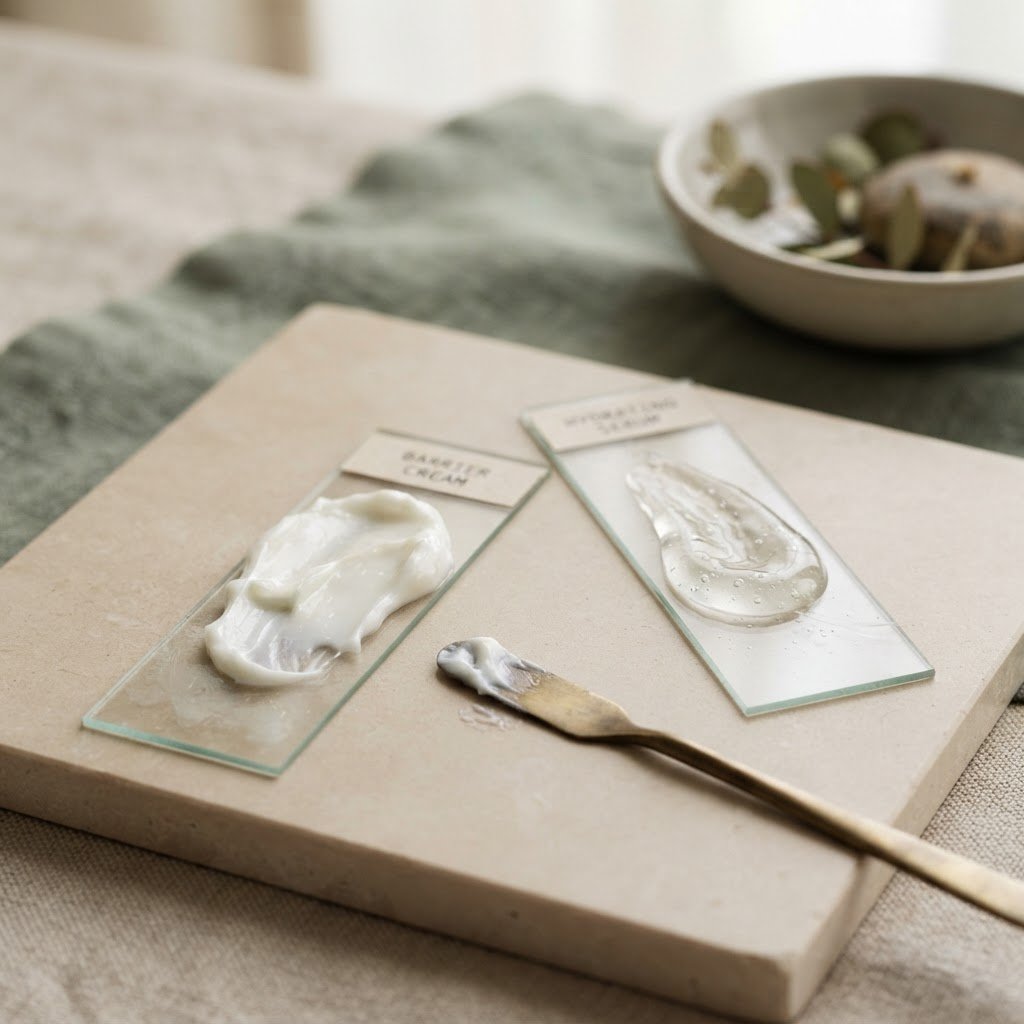
Apply a hydrating serum to slightly damp skin and follow with a moisturizer. In a dry climate, humectants can feel tight when used without an occlusive layer, so sealing with cream is important. This is because humectants draw water from wherever it is available — if the air is very dry and there is no moisturizer to trap the water, the serum may actually pull moisture out of the deeper layers of your skin, creating a counterproductive tight feeling.
Ceramides vs hyaluronic acid: detailed comparison
While the short answer above gives a quick overview, here is a more detailed breakdown to help you decide which ingredient — or combination — suits your needs:
| Feature | Ceramides | Hyaluronic Acid |
|---|---|---|
| Primary role | Supports the skin barrier and reduces moisture loss | Attracts and binds water in the outer skin layers |
| Mechanism | Reinforces lipid matrix between skin cells | Draws water from environment and deeper skin layers |
| Typical texture | Cream, lotion, or balm | Serum, gel, or lightweight lotion |
| Best suited for | Dry, flaky, or compromised barrier skin | Dehydrated, tight, or dull-looking skin |
| Best paired with | Gentle cleanser and sunscreen | Moisturizer or occlusive cream |
| Can be used alone? | Yes, especially in moisturizer form | Less ideal alone; needs a sealing layer |
| Common mistake | Assuming every rich cream suits every face | Using serum without a sealing moisturizer |
| Layering order | After water-based serums | On damp skin, before moisturizer |
| Works in humid climates? | Yes | Yes — draws moisture from the air |
| Works in dry climates? | Yes — helps reduce moisture loss | Use with caution; always seal with cream |
How to choose between ceramides and hyaluronic acid
For most people with dry, sensitive skin, the question is not which ingredient to choose but how to use both effectively. However, there are situations where you might prioritize one over the other:
When to prioritize ceramides
- Your skin feels dry and flaky even after moisturizing, suggesting that the barrier itself needs reinforcement rather than just water.
- You have recently over-exfoliated or used strong actives and your skin feels fragile or reactive.
- You live in a cold or windy climate where the skin barrier is under constant environmental stress.
- Your current moisturizer does not contain ceramides and you want to add a barrier-supporting step.
When to prioritize hyaluronic acid
- Your skin feels dehydrated and tight but does not necessarily look flaky — this often indicates a lack of water rather than a lack of oil.
- You want a lightweight, fast-absorbing hydration layer under makeup or sunscreen.
- You live in a humid climate where hyaluronic acid can draw moisture from the air.
- You are happy to follow with a moisturizer and want to add an extra hydration boost.
Can you use them together?
Yes — and for many people with dry, sensitive skin, using both is the ideal approach. A practical order is gentle cleanser, hyaluronic acid on damp skin if desired, ceramide moisturizer, and sunscreen in the morning. At night, keep the routine shorter and remove any step that stings.
Think of it this way: hyaluronic acid adds the water, and ceramides help keep that water from escaping. Using only a humectant without a barrier-reinforcing moisturizer is like pouring water into a cup with a hole in the bottom. Using only ceramides without adequate hydration is like sealing an empty cup. Both steps work together to create a well-hydrated, well-protected skin surface.
- Patch test one new product at a time. Apply a small amount behind the ear or on the inner forearm and wait 24–48 hours for any reaction.
- Use a small amount for several days before increasing frequency. Sensitive skin can react cumulatively, so gradual introduction helps you identify the cause if irritation appears.
- Stop if you develop intense burning, swelling, hives, or worsening rash. These are signs of an allergic or irritant reaction, not something to “push through.”
- Do not apply multiple exfoliating acids while you are trying to repair irritation. Salicylic acid, glycolic acid, and lactic acid can all compromise a fragile barrier if used aggressively.
Step-by-step routine for dry, sensitive skin
Here is a simple, dermatologist-aligned routine that incorporates both ceramides and hyaluronic acid. Adjust based on your skin’s response and your climate:
Morning routine
- Gentle cleanse: Use a non-foaming or lightly foaming cleanser with a pH close to the skin’s natural level (around 5.0–5.5). Avoid cleansers that leave skin feeling “squeaky clean,” as that tight feeling often indicates that too much lipid has been stripped.
- Hyaluronic acid serum (optional): While skin is still slightly damp from cleansing, apply 2–3 drops of a hyaluronic acid serum. Gently press — do not rub — it into the skin.
- Ceramide moisturizer: Apply a ceramide-containing moisturizer to seal in hydration and support the barrier. If you skipped the serum step, apply the moisturizer to damp skin after cleansing.
- Sunscreen: Apply a broad-spectrum sunscreen with SPF 30 or higher. UV exposure can damage the skin barrier over time, so daily sun protection is essential even on cloudy days.
Evening routine
- Gentle cleanse: Remove the day’s sunscreen, sebum, and any pollutants with the same gentle cleanser used in the morning.
- Hyaluronic acid serum (optional): Apply to damp skin as in the morning, if desired.
- Ceramide moisturizer: Apply a slightly thicker layer than in the morning, since nighttime is when the skin naturally focuses on repair and moisture retention.
Keep the routine simple. Sensitive skin often benefits from fewer products rather than more. If you find a routine that works, resist the temptation to add new products frequently — consistency is more valuable than constant experimentation.
Common myths about ceramides and hyaluronic acid
Myth: Hyaluronic acid can dehydrate your skin
This is a common concern, and it has a kernel of truth. In very dry climates with low humidity, hyaluronic acid applied to dry skin without a moisturizer can draw water from the deeper layers of the skin toward the surface, where it then evaporates. The solution is simple: always apply hyaluronic acid to damp skin and follow with a moisturizer. This way, the humectant draws water from the environment and from the dampness on your skin’s surface, and the moisturizer traps it there.
Myth: Ceramides are only for very dry skin
While ceramides are most heavily marketed toward dry skin, they play a role in all skin types. Even oily and combination skin can have a compromised barrier, and a lightweight ceramide lotion can provide support without heaviness. The key is choosing the right texture — a gel-cream or lightweight lotion for oilier skin, a richer cream for dry skin.
Myth: More hyaluronic acid equals more hydration
A higher concentration of hyaluronic acid does not automatically translate to better hydration. Concentrations around 0.1–2% are typical in well-formulated products, and beyond a certain point, additional hyaluronic acid may feel tacky or sticky rather than more hydrating. The molecular weight blend and overall formula matter as much as the percentage.
What else helps a damaged skin barrier?
Barrier care is about habits as much as ingredients. Use lukewarm water, avoid aggressive scrubbing, moisturize after cleansing, and protect exposed skin from ultraviolet radiation. Here are some additional lifestyle factors that may support a healthier barrier:
- Avoid prolonged hot showers: Hot water strips lipids from the skin more aggressively than lukewarm water. Keep showers short and warm rather than long and hot.
- Use a humidifier in winter: Indoor heating dramatically reduces humidity, which can increase transepidermal water loss. A room humidifier set to 40–60% humidity may help.
- Be mindful of diet and hydration: Drinking enough water supports overall skin hydration from the inside. Some research also suggests that essential fatty acids, including omega-3s, may play a role in skin barrier function.
- Avoid over-exfoliation: Physical scrubs, cleansing brushes, and chemical exfoliants can all compromise the barrier if used too frequently. Sensitive skin generally does best with gentle, infrequent exfoliation — or none at all during a repair phase.
Our related guide on skin barrier repair for sensitive skin covers cleansing and sunscreen in more detail. You may also find our collagen supplement guide, evidence-aware beauty supplement review, and probiotic overview useful for broader context.
Ingredient breakdown: what to pair and what to avoid
When building a routine around ceramides and hyaluronic acid, it helps to know which companion ingredients are generally well-tolerated and which ones to approach with caution if your skin is sensitive.
Ingredients that pair well
- Glycerin: Another humectant that works synergistically with hyaluronic acid. Many good moisturizers combine both for layered hydration.
- Niacinamide (Vitamin B3): Often included in barrier-supporting formulas; may help with skin smoothness and tolerance when used at moderate concentrations.
- Panthenol (Pro-Vitamin B5): A soothing ingredient that may help calm the look of irritation and is frequently found in products marketed for sensitive skin.
- Squalane: A lightweight emollient that can help soften the skin without the heaviness of some richer oils.
- Allantoin and colloidal oatmeal: Both have a long history of use in soothing formulations and are commonly included in products designed for reactive skin.
Ingredients to approach with caution for sensitive skin
- Fragrance (parfum): One of the most common triggers of irritation in sensitive individuals, even when labeled “natural fragrance.”
- Essential oils: While natural, many essential oils (such as citrus oils, peppermint, and eucalyptus) can be irritating to reactive skin.
- Denatured alcohol (alcohol denat.): Can be drying and irritating; often included in lightweight or mattifying products but generally not ideal for dry, sensitive skin.
- High-strength exfoliating acids: Glycolic, salicylic, and lactic acids can be beneficial in the right context but may further compromise a damaged barrier if used too aggressively.
Seasonal adjustments for your routine
Skin needs can change with the seasons, and your ceramide and hyaluronic acid routine may benefit from small adjustments throughout the year:
| Season | Challenge | Adjustment |
|---|---|---|
| Winter | Low humidity, indoor heating, cold wind | Use a richer ceramide cream; consider adding a humidifier |
| Spring | Transition period; skin adjusting to changing humidity | Maintain routine; introduce new products gradually |
| Summer | Heat, sweat, higher humidity, more UV exposure | Switch to a lighter ceramide lotion; keep hyaluronic acid lightweight |
| Fall | Decreasing humidity; barrier stress from temperature drops | Begin transitioning back to richer textures before winter |
What does dermatology guidance say?
The American Academy of Dermatology recommends gentle cleansing, moisturizing, and sun protection as foundations of skin care. See its dry skin guidance. The National Institute of Arthritis and Musculoskeletal and Skin Diseases also explains why atopic dermatitis requires individualized care.
The consensus from dermatology guidance is straightforward: protect the barrier, keep the skin hydrated, and avoid unnecessary irritation. Neither ceramides nor hyaluronic acid are medical solutions for skin conditions, but both align well with the gentle, barrier-focused approach that dermatologists generally recommend for maintaining healthy-looking skin.
Where do affiliate products fit?
Affiliate products should be evaluated for transparent ingredient lists, realistic claims, clear return policies, and a price that makes sense. A supplement does not replace a well-formulated moisturizer. If you are researching beauty-related products, start with our collagen supplement review, and regard it as background information rather than a promise of visible results.
For skincare specifically, the same principles apply: look for products from reputable brands that disclose full ingredient lists, avoid exaggerated marketing claims, and choose formulas designed for sensitive skin. A product that contains both ceramides and hyaluronic acid in one formula can be a convenient option, but you can also achieve excellent results by layering a dedicated hyaluronic acid serum under a ceramide moisturizer. Explore more of our beauty and wellness guides for additional product research.
Frequently asked questions
Are ceramides better than hyaluronic acid?
Neither is universally better. Ceramides support the barrier, while hyaluronic acid helps with water binding. Many dry-skin routines use both, and they address different aspects of skin hydration and protection. For the best results, choose based on your skin’s primary concern — flakiness and barrier fragility point toward ceramides, while tightness and dehydration point toward hyaluronic acid.
Can hyaluronic acid make sensitive skin drier?
It can feel tight for some people when used in a dry environment without moisturizer. Apply it to damp skin and seal with cream. If you live in a very dry climate and find that hyaluronic acid consistently feels uncomfortable, you may prefer to skip it and rely on a well-formulated ceramide moisturizer with added humectants like glycerin.
Should sensitive skin avoid all active ingredients?
No, but introduce products slowly. Fragrance, strong exfoliants, and frequent product changes are common sources of irritation. Some actives, like niacinamide at moderate concentrations, are generally well-tolerated by sensitive skin and may even support barrier function. The key is to introduce one new product at a time and observe how your skin responds over at least a week.
When should I see a dermatologist?
Seek professional advice for persistent itching, cracking, pain, swelling, oozing, or a rash that does not improve with gentle care. A dermatologist can help determine whether there is an underlying condition that requires targeted management beyond over-the-counter skincare.
Can I use ceramides and hyaluronic acid with retinol?
Yes, but with care. Retinol can be irritating, especially for sensitive skin. If you use retinol, apply it at night and consider layering a ceramide moisturizer afterward to help support the barrier. Some people alternate nights — retinol one night, ceramide and hyaluronic acid the next — to balance benefits with tolerance. Always introduce retinol gradually and avoid combining it with exfoliating acids in the same session.
Are oral ceramide supplements effective?
Some studies suggest that oral ceramide supplements — often derived from rice or konjac — may support skin barrier function from within, but more research is needed to draw firm conclusions. As with any supplement, the quality and dosage matter, and supplements should not replace a well-formulated topical routine. Consult your healthcare provider before adding any supplement to your regimen.
How long does it take to see results from ceramides or hyaluronic acid?
Hydrating products containing hyaluronic acid may provide an immediate plumping and smoothing effect, while barrier-supporting products with ceramides may take two to four weeks of consistent use to show noticeable improvement in dryness and texture. Individual results vary, and the overall routine — including cleansing, sun protection, and avoiding irritants — plays a major role in the timeline.
Conclusion
In the debate over ceramides vs hyaluronic acid for dry, sensitive skin, the most useful answer is often combination rather than competition. Use hydration when you need water, barrier lipids when you need support, and a simple routine you can follow consistently. Neither ingredient is a medical intervention, but both align with the gentle, barrier-focused skincare approach that dermatology guidance supports.
Start with a gentle cleanser, add hydration with hyaluronic acid on damp skin, seal with a ceramide moisturizer, and protect with sunscreen. Adjust your routine seasonally, avoid known irritants, and give new products at least a few weeks before evaluating results. If your skin concerns persist despite a careful routine, a dermatologist can provide personalized guidance.
For more on building a skincare routine that works for sensitive skin, explore our skin barrier repair guide and our anti-aging supplement guide. Taking a thoughtful, ingredient-aware approach to your skincare routine is one of the most effective things you can do to support healthy-looking, comfortable skin.