

 Rizioshop
Niacinamide Benefits for Skin: Science-Backed Guide to Clear, Glowing Skin
In the rapidly evolving world of skincare, few active ingredients have achieved the widespread acclaim and dermatological backing enjoyed by niacinamide. Whether you are struggling with persistent breakouts, enlarged pores, stubborn hyperpigmentation, or fine lines, this biological powerhouse promises to address multiple skin concerns simultaneously. Unlike harsh exfoliants or aggressive anti-aging treatments that can compromise your skin’s delicate moisture barrier, niacinamide is famously gentle, versatile, and well-tolerated across virtually all skin types.
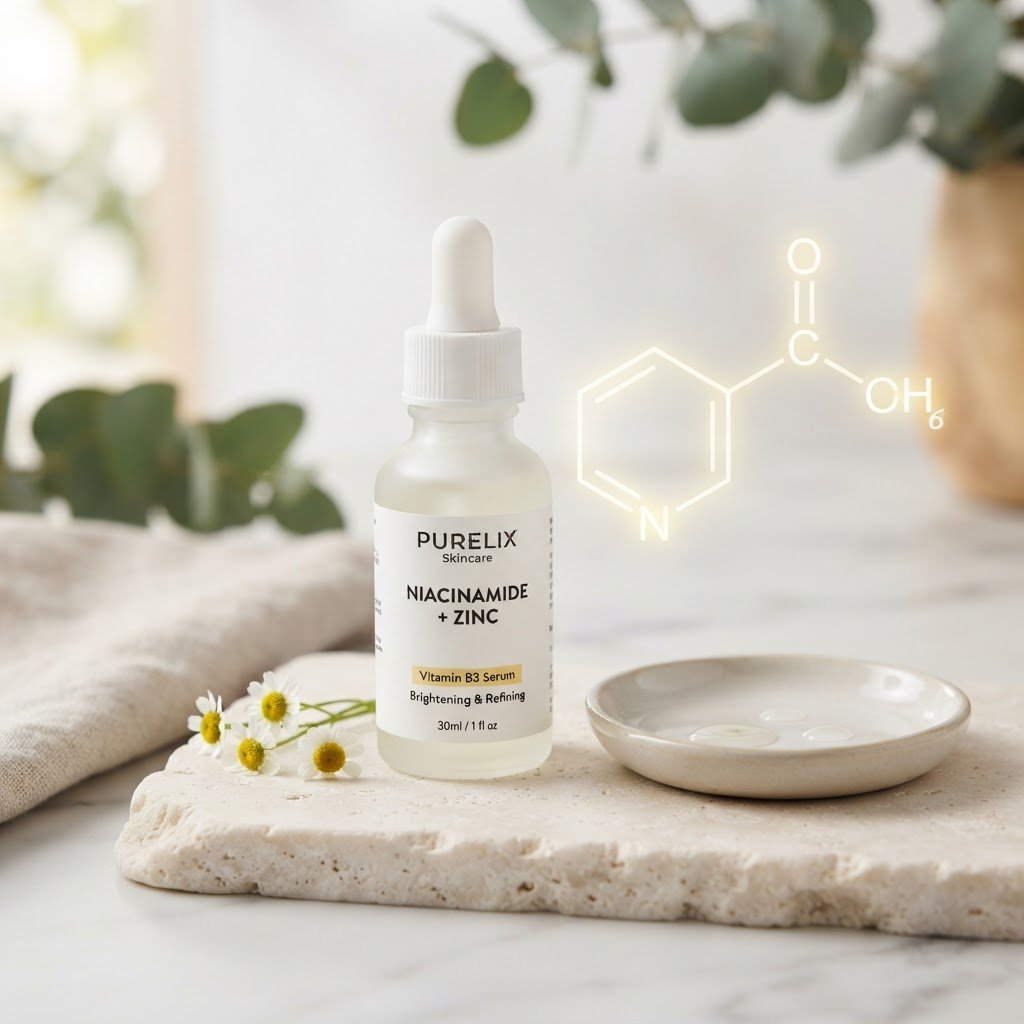
As we age—particularly past age 40—our skin’s natural repair mechanisms slow down. Ceramide production drops, transepidermal water loss increases, and environmental stressors like UV radiation accelerate collagen breakdown. If you are searching for a science-backed skincare active that delivers visible radiance, smooth texture, and enhanced resilience without triggering irritation, incorporating a high-quality niacinamide serum into your daily routine is one of the single most effective decisions you can make for long-term skin health.
In this definitive guide, we delve into the clinical science behind niacinamide benefits for skin. You will learn how this essential form of vitamin B3 skincare operates at the cellular level, how to choose the ideal concentration, how to layer it alongside other active ingredients like retinol and hyaluronic acid, and how to avoid potential side effects. Whether you are dealing with mature skin or acne-prone complexions, this evidence-based breakdown provides everything you need to achieve clear, radiant, and youthful skin.
What Is Niacinamide? The Science of Vitamin B3 Skincare
Niacinamide (also known as nicotinamide) is a water-soluble form of Vitamin B3, an essential micronutrient that plays a central role in cellular energy metabolism. In the human body, niacinamide serves as an indispensable precursor to two vital coenzymes: nicotinamide adenine dinucleotide (NAD+) and nicotinamide adenine dinucleotide phosphate (NADP+).
These coenzymes drive crucial biological processes within skin cells (keratinocytes and fibroblasts), including DNA repair, cellular regeneration, protein synthesis, and antioxidant defense against reactive oxygen species (ROS). Because our bodies cannot synthesize Vitamin B3 on their own, and because topical application delivers the vitamin directly to epidermal tissues, topical niacinamide serum formulations provide concentrated cellular fuel right where it is needed most.
Unlike its chemical derivative niacin (nicotinic acid), which is notorious for causing uncomfortable skin flushing and vasodilation, niacinamide has a neutral pH that integrates seamlessly into skin-care formulations without inducing redness or heat.
Top 5 Clinical Niacinamide Benefits for Skin
Dermatological research spanning several decades confirms that topical niacinamide acts on multiple biological pathways to transform skin health. Below are the primary clinically proven niacinamide benefits for skin.
1. Sebum Regulation and Pore Refinement
Excessive sebum (oil) production contributes to congested pores, inflammatory acne, and the appearance of enlarged, visible pores. Niacinamide modulates lipid production within the sebaceous glands, reducing overall sebum excretion without stripping the skin of essential moisture.
By preventing sebum build-up and preventing debris from mixing with dead skin cells, niacinamide keeps pores clean and allows stretched pore walls to bounce back to their natural, refined state. Clinical trials published on PubMed on topical niacinamide and facial skin appearance demonstrate that regular application significantly reduces shine and minimizes visible pore size within 4 to 8 weeks.
2. Fading Hypermipgmentation and Dark Spots
Hypermipgmentation—whether caused by sun damage, hormonal shifts (melasma), or post-inflammatory dark marks left behind by acne—occurs when melanocytes overproduce melanin pigment. Most skin-lightening agents (like hydroquinone or kojic acid) work by inhibiting tyrosinase, the enzyme responsible for melanin production.
Niacinamide works through an entirely unique and complementary mechanism: it inhibits the transfer of melanosomes (pigment-containing vesicles) from melanocytes into surrounding keratinocytes. A groundbreaking clinical study available on PubMed evaluating the effect of niacinamide on skin pigmentation demonstrated that 2% to 5% topical niacinamide significantly decreased hyperpigmented spots and increased skin lightness after four weeks of daily use.
3. Strengthening the Skin Barrier and Preventing Hydration Loss
The stratum corneum—the outermost layer of your skin—serves as a protective barrier that keeps moisture inside while keeping environmental pollutants, bacteria, and irritants out. A compromised skin barrier results in dryness, sensitivity, redness, and accelerated aging.
Niacinamide boosts the endogenous synthesis of essential lipid components, particularly ceramides, cholesterol, and free fatty acids. By increasing ceramide levels in the epidermis, niacinamide significantly reduces Transepidermal Water Loss (TEWL) and enhances overall skin hydration. To learn how to integrate this barrier booster into a comprehensive soothing regimen, explore our guide on skin barrier repair routines for sensitive skin.
4. Anti-Aging: Smooth Fine Lines and Boosting Collagen
As we age, dermal collagen and elastin fibers degrade, leading to wrinkles, fine lines, and loss of firmness. Niacinamide supports collagen synthesis in dermal fibroblasts while simultaneously reducing protein glycation (a process in which sugar molecules degrade collagen fibers, causing sallow, yellowing skin tone).
According to comprehensive clinical research review published in the National Center for Biotechnology Information (PMC) on clinical applications of nicotinamide, topical niacinamide increases dermal collagen production, reduces fine lines, and restores skin elasticity in mature individuals. Pairing topical niacinamide with oral collagen peptides guide for skin health creates a synergistic inner and outer strategy for collagen preservation.
5. Soothing Redness and Reducing Inflammation
Niacinamide possesses potent anti-inflammatory properties. It inhibits pro-inflammatory cytokines (such as IL-6, IL-8, and TNF-alpha) and reduces histamine release, making it an exceptional treatment for inflammatory acne, rosacea, and sensitive or reactive skin conditions. Educational materials from the American Academy of Dermatology (AAD) guide on skincare in your 40s and 50s frequently recommend anti-inflammatory agents like niacinamide to calm mature skin while promoting an even tone.
How to Use Niacinamide in Your Skincare Routine
Integrating a niacinamide serum into your daily routine is simple, thanks to its exceptional stability and compatibility with other ingredients. Follow these practical recommendations for maximum safety and efficacy.
Choosing the Right Concentration (2% to 5% vs 10%+)
More is not always better in skincare. Clinical studies proving the efficacy of niacinamide were conducted using concentrations between 2% and 5%. At these levels, niacinamide delivers optimal barrier repair, oil control, and spot-fading results without irritating the skin.
While many commercial brands market high-potency 10% or 20% niacinamide serums, these elevated concentrations offer diminishing returns and significantly increase the risk of redness, stinging, and contact dermatitis—especially in individuals with sensitive or mature skin. If you are new to Vitamin B3, stick with a 2% to 5% concentration.
Step-by-Step Routine Integration
Niacinamide is water-soluble, meaning it should be applied early in your routine after cleansing and toning, but before heavier oil-based creams or sunscreen.
- Step 1: Cleanser: Wash face with a gentle, sulfate-free cleanser.
- Step 2: Toner / Essence (Optional): Apply hydrating toner to damp skin.
- Step 3: Niacinamide Serum: Dispense 3–4 drops of 2–5% niacinamide serum and pat evenly over face and neck.
- Step 4: Moisturizer: Lock in hydration with a ceramide-rich moisturizer.
- Step 5: Sunscreen (Morning): Finish with a broad-spectrum SPF 30+ sunscreen. The AAD’s daily skincare routine guidelines emphasize that sun protection is essential when treating hyperpigmentation and aging.
Niacinamide Comparisons: Retinol, Hyaluronic Acid, and Vitamin C
To build a well-rounded skincare regimen, it helps to understand how niacinamide compares to and interacts with other popular active ingredients.
Niacinamide vs Retinol
Niacinamide vs retinol is one of the most common debates in dermatological skincare. While both are gold-standard anti-aging ingredients, their mechanisms differ substantially:
- Retinol (Vitamin A derivative): Accelerates cellular turnover, stimulates deep collagen production, and unclogs pores. However, retinol can cause initial dryness, peeling, redness, and barrier disruption.
- Niacinamide (Vitamin B3): Rebuilds the skin barrier, increases ceramides, controls oil, and calms inflammation without causing dryness or peeling.
The Verdict: You don’t have to choose between them! In fact, pairing niacinamide vs retinol together is an unbeatable combination. Applying niacinamide before retinol buffers the skin, reduces retinol-induced irritation, and stabilizes the skin barrier, allowing you to tolerate retinol much better.
Niacinamide vs Hyaluronic Acid
Hyaluronic acid is a humectant that attracts up to 1,000 times its weight in water, pulling hydration into the surface layers of the skin. Niacinamide, on the other hand, stimulates your skin’s own natural ceramide production to prevent that hydration from escaping. When combined in the same serum or layered together, hyaluronic acid provides immediate hydration while niacinamide seals the moisture barrier for long-term retention.
Niacinamide vs Vitamin C
There is an outdated myth in skincare that niacinamide and L-ascorbic acid (pure Vitamin C) cannot be used together because they cancel each other out or cause skin flushing. This belief was based on research from the 1960s that used unstable forms of raw ingredients at extreme temperatures.
Modern cosmetic chemistry has dispelled this myth. Formulated at room temperature, modern niacinamide and Vitamin C work together brilliantly to brighten skin tone, neutralize free radicals, and boost collagen. For sensitive skin types, you can apply Vitamin C in the morning for antioxidant defense and niacinamide at night for barrier repair.
Comparing Top Active Skincare Ingredients
The table below summarizes how niacinamide compares to other leading skincare actives across key skin performance metrics.
| Ingredient | Primary Mechanism | Best For | Skin Sensitivity Risk | Ideal Usage Frequency |
|---|---|---|---|---|
| Niacinamide (B3) | Inhibits pigment transfer, boosts ceramides, controls sebum | Barrier repair, pores, dark spots, redness, oil balance | Very Low (at 2–5%) | Twice Daily (AM & PM) |
| Retinol (Vit A) | Accelerates cell turnover, stimulates collagen renewal | Deep wrinkles, loss of firmness, severe texture issues | Moderate to High | Nightly (Start 2–3x/week) |
| Hyaluronic Acid | Humectant; draws water molecules into epidermis | Dehydration, surface plumpness, dry fine lines | Very Low | Twice Daily (AM & PM) |
| L-Ascorbic Acid (Vit C) | Potent antioxidant; inhibits tyrosinase enzyme | Brightening dull skin, sun damage, free radical defense | Low to Moderate | Once Daily (AM) |
Potential Side Effects and Precautions
Niacinamide is celebrated as one of the safest ingredients in dermatology. However, side effects can occasionally occur, primarily due to improper formulation or excessive concentration:
- Skin Flushing and Redness: When niacinamide is exposed to very low pH environments for extended periods, a tiny fraction may hydrolyze into nicotinic acid (niacin), causing temporary facial flushing. High-concentration serums (10–20%) are the most common culprit.
- Mild Stinging or Breakouts: If you experience small red bumps upon starting a 10% niacinamide serum, it is likely contact irritation from high potency rather than true purging. Switching to a 2% to 5% formulation usually resolves the issue instantly.
- Patch Testing Recommendation: As with any new product, perform a patch test on your inner arm or jawline 24 hours prior to full facial application.
To further support skin longevity and vitality from within, explore our research-backed guide to overall effective anti-aging supplements that work.
Frequently Asked Questions (FAQ)
1. How long does it take for niacinamide to show visible results on skin?
Most clinical studies show initial improvements in oil control, hydration, and redness reduction within 2 to 4 weeks of consistent daily use. Fading stubborn hyperpigmentation, refining visible pores, and smoothing fine lines typically require 8 to 12 weeks of twice-daily application.
2. Can I use niacinamide serum every day?
Yes. Niacinamide is gentle and non-sensitizing, making it suitable for twice-daily application (both morning and evening). Daily consistent use helps maintain high ceramide levels and keeps sebum production balanced.
3. Is 10% niacinamide serum better than 5%?
Not necessarily. Clinical research proves that 2% to 5% niacinamide achieves maximum benefits for skin barrier repair and hyperpigmentation without irritating the skin. Higher concentrations (10% or more) do not significantly increase efficacy but carry a much higher risk of redness and irritation.
4. Does niacinamide purge the skin like retinol or acids?
No. True skin purging occurs when ingredients accelerate cellular turnover (like retinoids or chemical exfoliants), bringing underlying microcomedones to the surface. Niacinamide does not speed up cell turnover, so it does not cause purging. If you experience breakouts from a niacinamide serum, it is likely a reaction to high concentration or another ingredient in the product formulation.
5. Can I use niacinamide if I have rosacea or sensitive skin?
Yes! Niacinamide is highly recommended by dermatologists for rosacea and sensitive skin. Its anti-inflammatory properties soothe facial redness, reduce flushing reactivity, and strengthen a compromised lipid barrier.
Conclusion
Niacinamide stands out as a true multi-tasking hero in modern dermatological skincare. By reinforcing the skin’s lipid barrier, regulating oil production, blocking hyperpigmentation transfer, and soothing inflammation, this versatile form of Vitamin B3 offers scientific solutions for virtually every skin concern. Whether used as a standalone serum, paired with retinol to mitigate irritation, or combined with hyaluronic acid for deep hydration, niacinamide delivers healthy, clear, and glowing skin at any age.
Gostou deste conteúdo? Confira nossa recomendação especial para aprofundar seus conhecimentos.