

 Rizioshop
Skin Barrier Routine for Redness and Sensitivity: A Gentle Guide
A reactive, red, or easily irritated complexion often does not need a longer routine. It may need a simpler one. A thoughtful skin barrier routine for redness and sensitivity focuses on gentle cleansing, replenishing moisture, protecting from ultraviolet exposure, and introducing new ingredients slowly.
Redness can have many causes, including irritation, dryness, allergies, acne, rosacea, or environmental exposure. This article is educational; persistent flushing, burning, swelling, pain, or a rash should be evaluated by a qualified professional.
What the skin barrier does
The outer layer of skin helps limit water loss and serves as a first-line physical barrier. Lipids such as ceramides, cholesterol, and fatty acids help organize this layer. Over-cleansing, harsh scrubs, frequent acids, fragranced products, and very hot water can make sensitive skin feel tighter or more uncomfortable.
Barrier care is not about stopping every active forever. It is about creating a stable baseline before adding products that target a specific concern.
The three-step morning routine
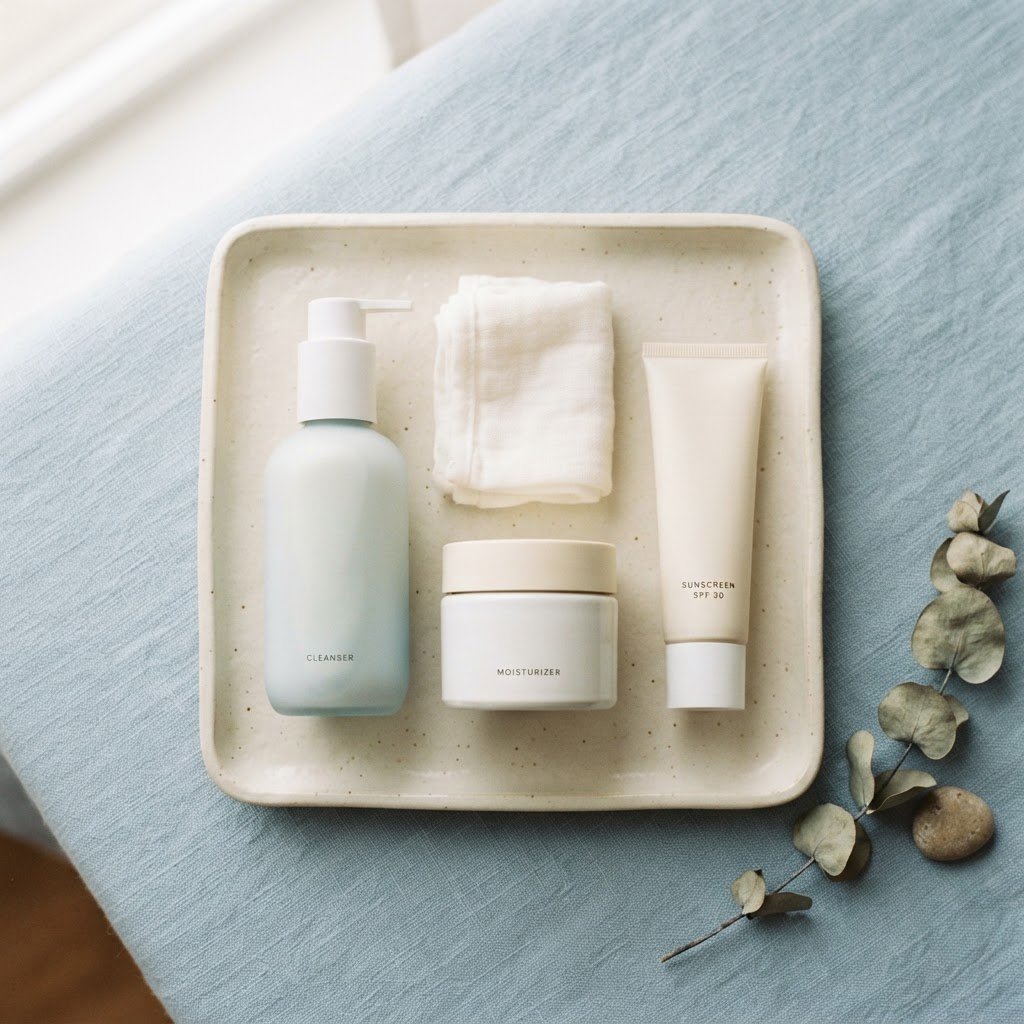
Step 1: Cleanse only as needed
Many people with dry or sensitive skin can rinse with lukewarm water in the morning and use a gentle cleanser at night. Look for a fragrance-free formula that does not leave a squeaky or tight finish.
Step 2: Moisturize
Apply moisturizer while skin is slightly damp. Formulas with glycerin, petrolatum, squalane, or ceramides may be useful depending on your texture preference. The goal is comfortable skin, not a complicated ingredient list.
Step 3: Use sunscreen
Broad-spectrum SPF 30 or higher helps protect against ultraviolet exposure. Mineral formulas containing zinc oxide may suit some sensitive-skin users, although any sunscreen can irritate an individual person. Reapply based on time outdoors, sweating, and label directions.
The evening routine
Remove sunscreen and makeup gently, cleanse without scrubbing, and apply moisturizer. If the skin is actively stinging, pause exfoliating acids, retinoids, fragranced masks, and essential oils until comfort returns.

Ingredients that may support comfort
- Ceramides: barrier-supporting lipids found in many moisturizers.
- Glycerin: a humectant that helps attract water to the outer skin.
- Petrolatum: an occlusive ingredient that can reduce water loss.
- Colloidal oatmeal: often used in products designed for dry or itchy skin.
- Panthenol: a conditioning ingredient that may improve a product’s feel.
Ingredient tolerance is individual. More ingredients do not automatically mean better results. For a related comparison, read ceramides vs. hyaluronic acid and see the RizioShop barrier repair routine.
What to avoid when skin is reactive
- Do not introduce several new products at once.
- Avoid physical scrubs and aggressive cleansing brushes.
- Be cautious with fragrance, essential oils, and high-strength exfoliants.
- Do not assume tingling means a product is working.
Patch testing a new product on a small area for several days can reduce the chance of a full-face surprise, but it cannot guarantee that irritation will not occur. If you use prescription treatment, follow your clinician’s plan rather than replacing it with cosmetic products.
How to introduce an active
Once the basic routine feels comfortable for at least a couple of weeks, introduce only one active at a time. Use it less frequently than the label maximum, moisturize consistently, and stop if burning, swelling, hives, or worsening redness develops.
The American Academy of Dermatology offers practical dry-skin guidance. Harvard Health also discusses the role of gentle skin care and sun protection in everyday skin health.
FAQ
Should sensitive skin be exfoliated?
Not necessarily. Some people tolerate gentle exfoliation, but it is optional. If your skin is red or stinging, prioritize comfort and barrier support first.
Are natural ingredients always gentler?
No. Plant extracts and essential oils can still cause irritation or allergy. Fragrance-free and well-formulated matter more than the word natural.
How long does barrier care take?
Comfort may improve within days, while visible dryness or uneven texture can take longer. Persistent symptoms should be assessed professionally.
Conclusion
A successful skin barrier routine for redness and sensitivity is intentionally boring: gentle cleansing, consistent moisturizer, daily sun protection, and slow experimentation. Use fewer products, watch your skin’s response, and get individualized care when redness does not settle.
Affiliate disclosure: RizioShop may earn a commission from qualifying purchases at no extra cost to you. This article is educational and is not medical advice.


[…] related guides on redness and sensitivity, barrier repair, and ceramides versus hyaluronic acid can help you compare […]