
 Rizioshop
Peptides vs Retinol: Which Is Better?
RizioShop Skincare Web Story
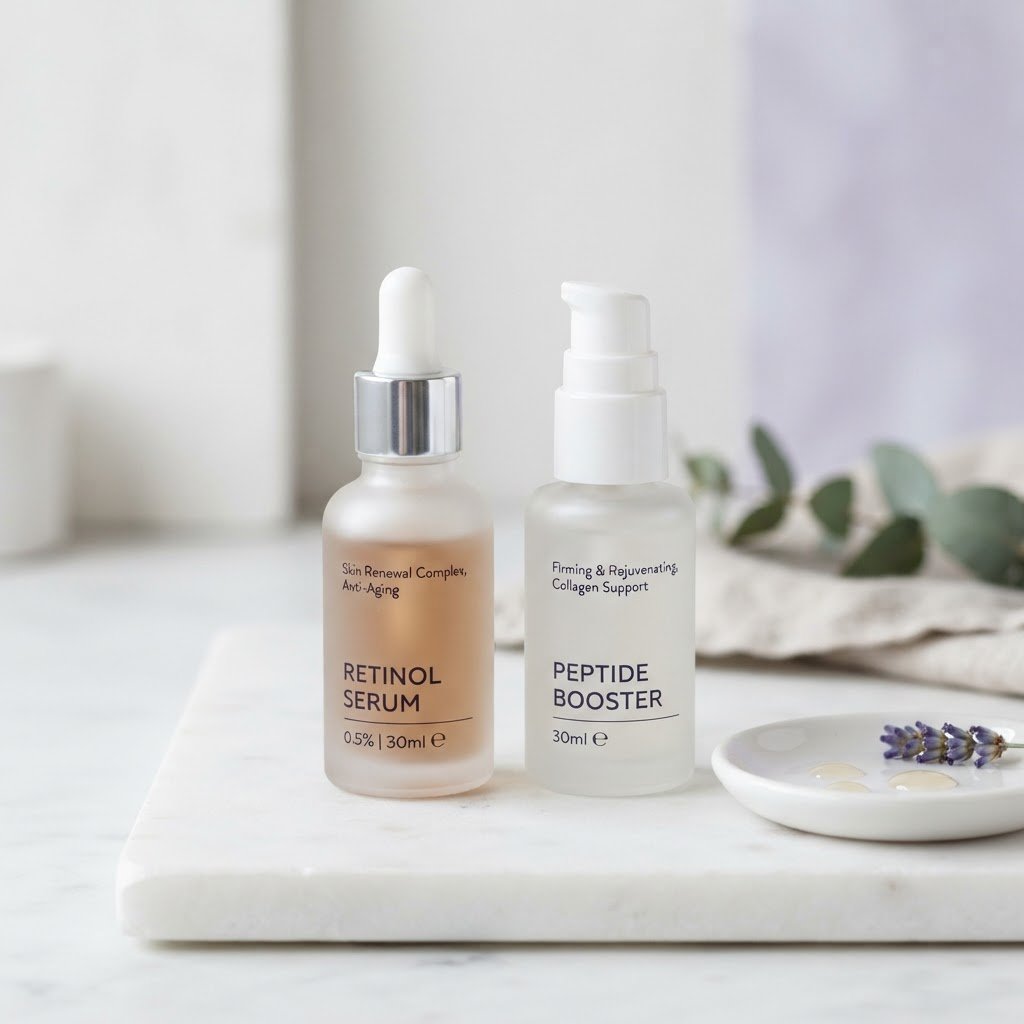
Peptides vs Retinol: Which Is Better for Anti-Aging?
Two of the most powerful anti-aging ingredients — but which one deserves a spot in your routine? Let’s compare them head to head.
Retinol: The Cell Renewer
Retinol accelerates cell turnover, unclogs pores, and smooths texture. It’s the gold standard for anti-aging — but it can cause irritation for sensitive skin.
Peptides: The Collagen Builder
Peptides signal your skin to produce more collagen. They’re gentle, well-tolerated by all skin types, and work proactively to maintain firmness.
Speed of Results
Retinol shows visible changes in 6–12 weeks. Peptides take 4–12 weeks. Both require consistency, but retinol may produce more dramatic changes faster.
Gentleness
Peptides win here. They rarely cause irritation and are safe for daily use. Retinol requires gradual introduction and can cause redness and dryness.
Versatility
Retinol fights acne, texture, and pigmentation. Peptides focus on firmness and repair. Both are versatile, but retinol covers more concerns.
The Real Answer: Use Both
They’re not competitors — they’re team players. Use retinol at night for cell renewal, then apply peptides to soothe and rebuild. Together, they’re unstoppable.
Want the Full Comparison?
Our complete guide breaks down every peptide type, how they work, and how to combine them with retinol for maximum anti-aging results.