

 Rizioshop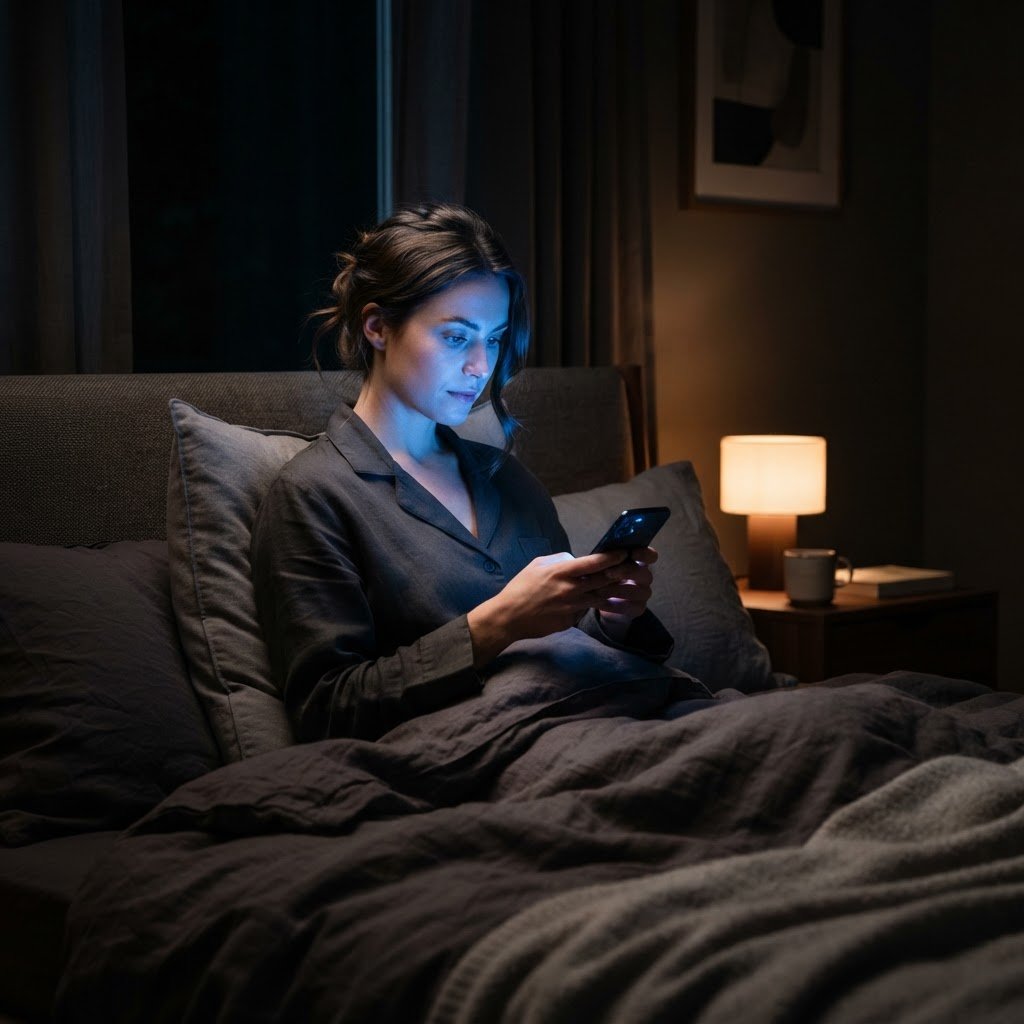
Every night, millions of Americans scroll through their phones, tablets, and laptops right before bed. It feels harmless — catching up on messages, watching one more video, or reading a few articles. But that glow from your screen might be the reason you’re lying awake at 2 AM wondering why sleep won’t come.
Blue light exposure at night has become one of the most talked-about sleep disruptors in recent years, and for good reason. Research shows that the blue wavelengths emitted by digital screens interfere with your body’s natural sleep-wake cycle in ways that can seriously impact your health over time.
What Is Blue Light and Why Does It Matter?
Blue light is a high-energy, short-wavelength light that’s naturally present in sunlight. During the day, blue light is essential — it boosts attention, reaction times, and mood. It’s what tells your brain “stay awake and alert.” The problem isn’t blue light itself; it’s when you’re exposed to it.
Your body operates on a roughly 24-hour internal clock called the circadian rhythm. This clock relies on light cues to know when to produce melatonin (the sleep hormone) and when to suppress it. When sunlight fades in the evening, your brain naturally starts producing melatonin, preparing you for sleep. But when you stare at a screen emitting artificial blue light, your brain gets confused. It thinks it’s still daytime and holds back melatonin production.
How Blue Light Disrupts Your Sleep Cycle
Studies from Harvard Medical School found that blue light exposure at night suppresses melatonin production for up to twice as long as green light. The effects go beyond just feeling tired the next morning. Chronic blue light exposure at night has been linked to:
- Difficulty falling asleep and staying asleep
- Reduced REM sleep quality
- Daytime fatigue and brain fog
- Mood disturbances, including irritability and anxiety
- Increased risk of metabolic disorders
- Long-term disruption of natural hormone balance
Practical Ways to Reduce Blue Light Exposure at Night
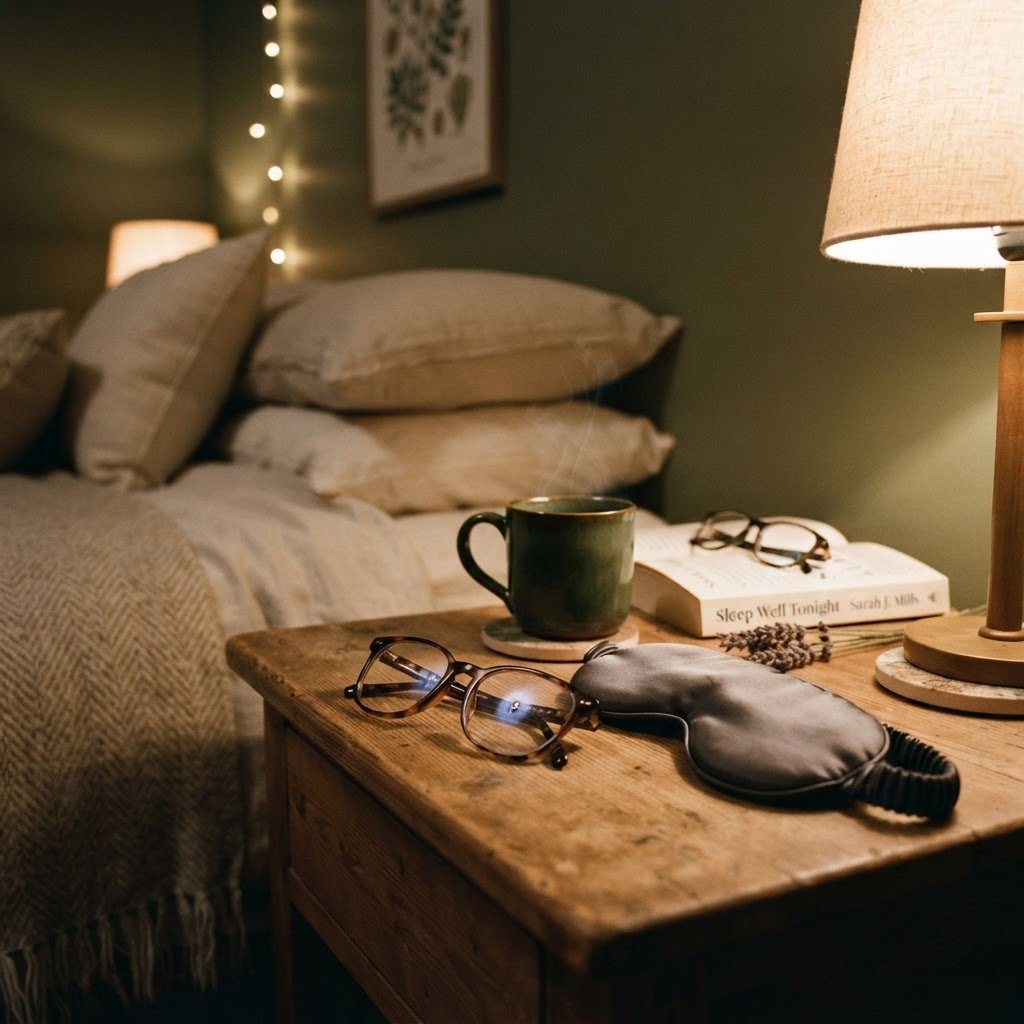
The good news is that you don’t need to give up your devices entirely. A few simple adjustments can dramatically reduce your blue light exposure and help restore your natural sleep cycle:
1. Use Blue Light Blocking Glasses
Amber-tinted blue light blocking glasses can filter out up to 90% of blue wavelengths. Wear them for 2-3 hours before bed to help your body transition into sleep mode naturally. You can find quality blue light blocking glasses on Amazon — look for ones that block at least 90% of blue light in the 400-500nm range.
2. Enable Night Mode on Your Devices
Both iOS and Android have built-in night shift features that warm the color temperature of your screen automatically at sunset. On computers, apps like f.lux adjust your screen’s color based on time of day. While not as effective as blocking glasses, these settings do help reduce blue light emission significantly.
3. Try a Nervous System Reset Routine
If screen time is unavoidable in the evening, consider a natural nervous system reset protocol to help your body wind down. The Frequency Shift Protocol is a 7-minute technique designed to calm your nervous system and prepare your body for deep sleep, even after exposure to artificial light. Many users report falling asleep faster and experiencing more restorative sleep when combining this routine with reduced screen time.
The Connection Between Light, Stress, and Sleep Quality
Blue light doesn’t just affect melatonin — it also impacts cortisol, your body’s primary stress hormone. Normally, cortisol should be high in the morning and low at night. But artificial blue light can keep cortisol elevated into the evening, making you feel wired but tired. This is why some people feel exhausted all day but suddenly get a burst of energy at 10 PM.
Breaking this cycle requires addressing both the light exposure and the nervous system response. The combination of blue light reduction and a calming pre-sleep routine can help restore your body’s natural cortisol-melatonin rhythm.
Affiliate Disclosure
This article contains affiliate links. If you purchase through these links, we may earn a commission at no additional cost to you. We only recommend products we believe will genuinely help our readers.
Key Takeaways: Blue light from screens suppresses melatonin and disrupts your circadian rhythm. Reducing evening screen time, using blue light glasses, and adopting a nervous system reset routine can help restore natural sleep patterns. Quality sleep is foundational to overall health — protecting your sleep cycle is one of the most impactful health decisions you can make.
Related Reading: Magnesium Glycinate: The Complete Guide to Sleep, Anxiety, and Overall Wellness, Magnesium Glycinate vs Citrate for Sleep: Which Form Fits?.